

Triangle Strategy
 by Mikhail
Mar 8, 2022 |
0
Votes |
65
Played |
0
Reviews
 -
rate
Genres:
Strategy , RPG , AnimeGraphics:
3DLabels:
Turn Based , Fantasy Setting , Anime , Medieval AgePlatforms:

Publishers:
Square Enix Triangle Strategy is Square Enix’s newest entry in their line of HD-2D games featuring tactical turn-based battles. It follows the story of Serenoa Wolffort’s adventures in the land of Norzelia, and you will get to decide the future of the continent based on your actions. Play Now Similar Games


People Also Played


Summary
It’s been a long wait, but we’ve finally received a new tactical RPG game from Square Enix in the form of Triangle Strategy, created with the patented HD-2D visuals akin to those in Octopath Traveler. The game centers around a well-crafted tale between three states and the protagonist whose decisions will shape the fate of the land. You’ll explore and fight alongside a group of companions, each with their own stories and backgrounds.
We can’t help but compare Triangle Strategy to Final Fantasy Tactics and FFT: War of the Lions on the PlayStation 1 and PlayStation Portable. Yes, Square Enix - and Team Asano - returns triumphantly to the TRPG genre, and we can safely say it’s their finest work yet. Unfortunately, it feels as if Triangle Strategy is weighed down by its storytelling mechanics and a few gameplay choices and deviates from a few aspects that made the Final Fantasy Tactics games cult classics.
Nevertheless, Triangle Strategy provides a fresh experience and breathes new life in the resurgent TRPG genre. Apart from the excitingly challenging tactical battles, it tells a compelling tale of war, greed, and politics while forcing you to make difficult choices.
Plotline
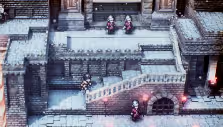


Triangle Strategy is set in the land of Norzelia, home to three states. First is the fertile Kingdom of Glenbrook, where our protagonist, Serenoa Wolffort, lives. Second is the Holy State of Hyzante, a theocracy that controls The Source, a lake where all the salt of the continent comes from. Finally, the third is the Duchy of Aesfrost, a nation centered on iron and technology.
Without diving deep into spoilers, Triangle Strategy provides a Game of Thrones-esque story, with lots of deaths and rather heavy themes. The decisions you’ll make will be difficult and center around three aspects: Utility, Morality, and Liberty. It’s also essential to note Serenoa won’t be the one deciding since his close companions will be voting via the Scales of Conviction. The choices are heavy, with some making you decide whether to engage in smuggling or to leave an oppressed people to their fate. There are four different endings, and your choices will determine where you’ll end up.
Serenoa will be aided by several companions, including the family steward, Benedict, his bride-to-be Frederica, and his best friend and second prince of Glenbrook, Roland. Save for Frederica, most characters lack personality, and it’s hard to find them likable. I wasn’t invested in Serenoa and Delita as much as with FFT characters Ramza and Delita. It also doesn’t help that the story is told through long and frequent cutscenes; in any case, this isn’t the best way to tell a tale.
Gameplay
Triangle Strategy feels like it is constricted by its story. There’s no overworld exploration, although the parts where you explore towns and chat with locals are pretty fun. As said earlier, the game tells the story via cutscenes you can access via the map. In addition, there are occasional character-centric stories and non-essential cutscenes that give you more information about a character. Some even let you recruit people to add to your motley crew of gifted fighters.
In-between stories and battles, you’ll have the chance to acquire new items and upgrade your characters using specific objects via the Encampment. Characters are limited to a single, upgradeable class with no customization, except when you equip them with new accessories. You can also access Mental Mock Battles which gives you various tactical scenarios and yields rewards after you fight.
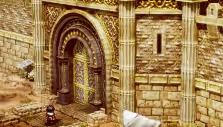

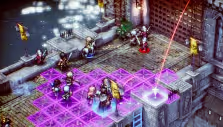
Triangle Strategy shines in the combat aspect. The battles are top-tier and highly challenging. Sure there’s no permadeath, but the difficulty is on a higher level compared to Fire Emblem and FFT: WOTL. Every character has unique skills which add tactical depth, giving you new ways to approach specific objectives. For example, Anna the Assassin can get behind enemy lines and pick off enemy mages, while Erador is a legit tank that absorbs damage like a sponge. Some characters work well with Frederica and Julio, while others, like Jens, can add traps and ladders to the battlefield.
The game’s maps range from wide-open fields, defendable fortresses, and even high cliffs where archers can thrive. Different weather conditions affect combat, while specific tiles are flammable, especially those with vegetation. Terrain plays a crucial role, and you need to use them wisely if you hope to win.
Graphics/Sound
Triangle Strategy is THE perfect way to showcase the capabilities of HD-2D. It was a wonderful experience; the terrain and environment designs are a treat to the eyes. The character art and designs possess the usual top-notch quality Square Enix is known for. The same can be said about the music. The voice acting feels like a notch below its peers but holds up well. In particular, Frederica’s actress gave a standout performance which may give her more roles in the future.
Conclusion
Triangle Strategy is Square Enix’s fantastic return to the TRPG genre, and we highly recommend it. Though it stumbles in the storytelling and character upgrade mechanics, everything else is an upgrade, setting the bar high for future TRPGs.
Triangle Strategy Blog
New Game Added: Triangle Strategy
by Mikhail
Mar 8, 2022
Read More

Featured Games
 RAID: Shadow Legends
Recruit the best to join your team and take on Siroth, the Lord of Darkness himself!
 Dark Genesis
Play Dark Genesis and save the world from destruction with your allies.
 Pearls of Atlantis: The Cove
Shoot pearls and match them all together in Pearls of Atlantis: The Cove!
 Infinite Crisis
Become a Superhero and Save the Multiverse in A Stunning MOBA by DC Comics.
 Sparta: War of Empires
Fight off The Persians & Other Spartans in a Stunning Strategy Game Set in Sparta.
 League of Angels
Enjoy a Great MMORPG & Fight with Angels at your Side against A Great Evil.