




MEMORIAPOLIS
 by Aethyna
Sep 24, 2024 |
1
Votes |
94
Played |
0
Reviews
 9
rate
Genres:
Simulation , Strategy , PuzzleGraphics:
3DLabels:
City Building , Tetris , Management , Roguelike/roguelite , Tower Defense , Medieval AgePlatforms:

Publishers:
Refic Games Trade with other cities, unlock new technologies, resolve events and conflicts, and enact new decrees in your bid to ensure you have your people’s support and continue to develop your little village into the sprawling city you know it can become in MEMORIAPOLIS! Play Now Similar Games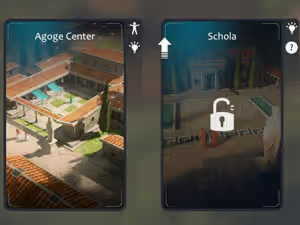
People Also Played


Summary
Memoriapolis is a 4x strategy-inspired city-building game that spans eras. Here, you’ll need to manage your growing city, its many (oftentimes conflicting) factions, and a plethora of crucial resources to ensure your people’s needs are being met and that you have what you need to make your city attractive enough so that more wanderers will want to settle down in your city, providing much-needed manpower to fuel your city’s growth. Trade with other cities, unlock new technologies, resolve events and conflicts, and enact new decrees in your bid to ensure you have your people’s support and continue to develop your little village into the sprawling city you know it can become!
Gameplay
Memoriapolis combines the complexity of 4x strategy games with the fun of min-maxing everything to achieve a nice balance that’s prevalent in city builders. In this game, you don’t really get to decide where your citizens live. You don’t get to “zone out” areas for them to build their hovels, nor do you get to build actual houses for each family that moved in. Instead, you can build cultural buildings and decorations to hopefully increase the attractiveness of a specific area you want to develop and avoid any structures that generate Disturbance. Newcomers to the city will typically build their homes in places where the attractiveness is high.
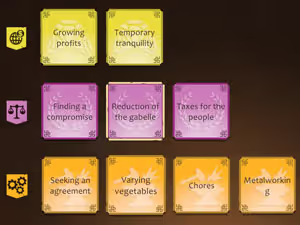
People management is also a thing here in Memoriapolis. Keeping people happy (and away from trouble) isn’t as simple as fulfilling their basic needs in this game. There are other needs too, which the game neatly groups into five categories – Health (this is where the food and basic needs come in), Safety, Belonging, Esteem, and Creativity. These needs are fulfilled by building the corresponding cultural buildings. Some cultural buildings will even have extra slots where you can then choose, which specific need you want them to fulfill. You can also bump up some of these stats by enacting the corresponding decree, but you should know that you can have only so many decrees active at the same time.
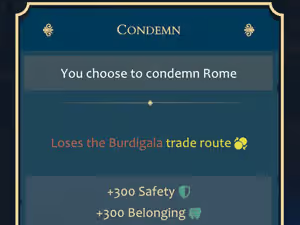
Aside from taxes, which you can control, the game features various factions, each specializing in an aspect of culture, whether it is Commerce, Politics, Education, or even the Military. As you might expect, these factions generally don’t work well with one another, and conflicts will arise that will need your attention. Resolving these conflicts can be tricky sometimes and may even involve evicting the faction you don’t like…. Usually at a cost. The decisions you make, as well as how well you fulfill each faction’s requests and needs, will determine how much they trust you. The higher the trust, the better your chances of preventing any unwanted issues like riots or arson in your city.
Factions aren’t black-and-white in this game, either, despite their differences. Depending on the cultural buildings around them, the faction can be influenced by other cultural aspects. That said, only the predominant one will be taken into account when the game calculates how many cultural points you’ll earn. Each faction will generate cultural points over time, and you can invest these points via the Cultural Radiance panel into their respective cultural aspects.
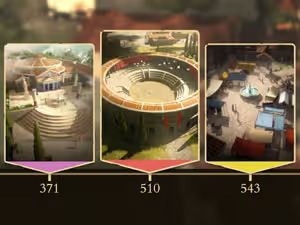
These points are crucial when it comes to advancing your civilization into the next age. Reaching each milestone will unlock amazing perks like bonuses to trust and wonders, as well as unlocking decorative buildings, which will increase the attraction of an area when built. At the end of the finish line, you’ll then unlock the “Build a wonder” quest, which will allow you to advance to the next age. There are four eras, with two currently available, namely, Antiquity and Medieval, and two more still in the works.
Unlike other structures, your old cultural buildings will be destroyed as you move from one age to another since you’ll get a new set of cultural buildings to build, but you can repair the old ones if you’ve got the materials to spend. At this point, I should point out that the game has strict boundaries around your budding village in which you can build.
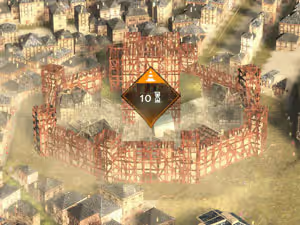
That said, you can easily expand your building area via upgrades or by constructing Proximity buildings like the Surveyors’ cabin. The area of a cabin must be within reach of another buildable area or it won’t work, so essentially, if you want to reach a resource node that’s a bit far out, you can chain up your cabins so you could build… say, a quarry there. Note that you can also upgrade the cabins to further expand the radius of the buildable area they provide and that there’s a limit as to how many cabins you can build – though this limit is increased as you progress.
Not every building, including the service buildings, typically unlocks a new game feature, be it trade or storage management, when it is built, and it is unlocked right from the start. And to do so, you’ll need to have enough blueprints. Blueprints can only be earned over time after constructing the Architectural Office. You can, of course, upgrade your Office to increase the rate in which blueprints are being generated.

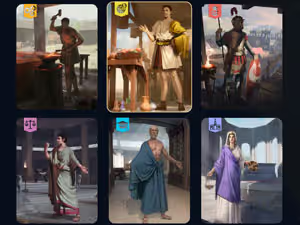
In MEMORIAPOLIS, the game will also have you balancing the input and output of a host of resources, ranging from wood to ores to even clay and sand. These resources are then used to upgrade your buildings, build new ones, or even turn into more advanced materials. Resources are finite in the game world, but there should be enough of them to keep you going for quite a while.
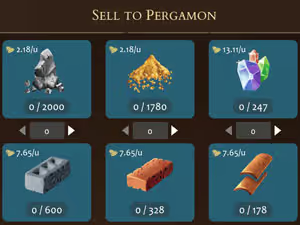
Resources can be traded away for gold as well, which can then be spent on various other things, including construction, enacting new decrees, and buying resources from others. That said, the trading feature in this game has a rather weird mechanism. It has a “cooldown” for, I assume, the trade caravan to reach its destination and to return with the goods, but in terms of the numbers, you instantaneously get the resources you bought or the money you’ve sold items for. Game logic, I guess? Or perhaps this is just temporary since the game is still in early access after all.
Currently, the game has quite a bit of content to give players a good taste of the gameplay (for a city-builder game, at least) and oftentimes leaves them wanting more. The main content involves going through its campaign a.k.a. Classic mode, which includes some historically-inspired events, where you may need to pick sides. There’s also an endless mode, which is kind of experimental for now, so you might want to temper your expectations a bit while going in. It would be cool to have a creative mode, too, I reckon. The building models are just so incredible, and it would be nice to be able to really build a city of my exact (and ideal) design just for fun… ah, who am I kidding? It’s for all the likes – it has always been the likes.
Graphics/ Sound
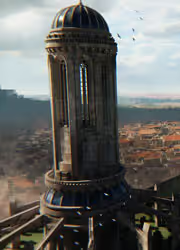
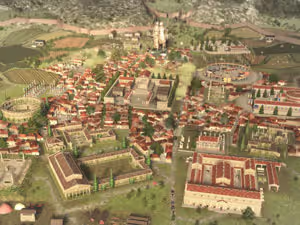
Memoriapolis features gorgeous visuals that really showcase the growth and development of your city as it progresses through the ages. It’s just a pity that you can’t really zoom in for a close-up – you can zoom in just that much. That said, the game does its aerial view right, giving players a fantastic top-down view of their sprawling city.
In terms of sound, the game features a selection of fairly chill tunes interspersed with moments of just pure ambiance. Personally, I’m not a huge fan of every single tune in the game, but most of them are pretty alright. They don’t distract you from the game at hand, which is the most important thing in my book.
Conclusion
Despite in early access, MEMORIAPOLIS has already shown so much potential as a truly unique city builder, thanks to having elements of 4x strategy and some intriguing gameplay mechanisms. The UI is well-designed, with plenty of nifty management tools available to help you manage your growing city, be it your resources and production facilities or your people and the factions they stick to. For any avid city builder, MEMORIAPOLIS is one game you don’t want to miss out on! Play it now in early access or add it to your wishlist so you can grab it the moment it fully launches!
MEMORIAPOLIS Blog
New Game Added: MEMORIAPOLIS
by Aethyna
Sep 24, 2024
Read More

Featured Games
 RAID: Shadow Legends
Recruit the best to join your team and take on Siroth, the Lord of Darkness himself!
 Dark Genesis
Play Dark Genesis and save the world from destruction with your allies.
 Pearls of Atlantis: The Cove
Shoot pearls and match them all together in Pearls of Atlantis: The Cove!
 Infinite Crisis
Become a Superhero and Save the Multiverse in A Stunning MOBA by DC Comics.
 Sparta: War of Empires
Fight off The Persians & Other Spartans in a Stunning Strategy Game Set in Sparta.
 League of Angels
Enjoy a Great MMORPG & Fight with Angels at your Side against A Great Evil.
