




Lakeburg Legacies
 by Aethyna
Jul 26, 2023 |
1
Votes |
36
Played |
0
Reviews
 8
rate
Genres:
SimulationGraphics:
2DLabels:
City Building , Dating , ManagementPlatforms:

Publishers:
Ishtar Games Lakeburg Legacies is a village management/dating sim, where not only will you be playing matchmaker for your villagers, but you’ll also need to ensure you cater to your people’s likes and dislikes, aspirations, and relationships with others as you try to staff various production buildings around town so you could grow your village. Play Now Similar Games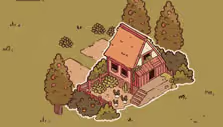

People Also Played


Summary
Lakeburg Legacies is a village management-slash-dating sim, where not only will you be playing matchmaker for your villagers, but you’ll also need to ensure you cater to your people’s likes and dislikes, aspirations, as well as social relationships with others as you try to staff various production buildings around town so you could grow the village some more. Will you be able to navigate the complexities of relationships while ensuring your villagers’ various needs are fulfilled?
Plotline
You craft your own story here in Lakeburg Legacies! There will be many events that you’ll encounter along the way, including cheating scandals and disputes between social classes, that will shape your people’s relationships and how they perceive one another. You could even pry couples apart, take down monarchs you, yourself, have appointed if you’ve found someone better suited for the job, and more!
Gameplay
Before you start, you’ll need to first set up your game. There are many ways you can customize your game here, such as choosing the game mode (or, as the game calls it, “game style”), adjusting the game duration, or even tinkering about individual game settings like the economy.
By default, the game will have you opt out of the tutorial, but personally, I’d recommend ticking that box if you’re new to the game. The number of features here can be quite daunting to learn as you play, especially on your own. Trust me, you’ll miss out on a lot! Even so, the tutorial doesn’t really hold your hand throughout either, giving you the space to figure some things out yourself.
The gameplay in Lakeburg Legacies can be quite easily split into two main sections – the dating sim part, where you’ll have to manage and navigate the complexities of relationships amongst your people, and the village management part, where resource management is key. Since the dating sim part seems rather unique for a typical village builder/management game, I thought we should start there!
Now, you’ll start off your village with only one villager, but you’ll be able to quickly expand on that by finding a suitable partner for him or her. You can do so by approaching the matchmaker, who will then find a range of potential suitors, either from within the village itself (don’t worry about possible incest; this is something that the game will help you avoid), which is unlikely at the start since you only have one village, or from the surrounding villages. Note that you can have both hetero and same-sex couples in this game, so the gender of the suitor doesn’t really matter here.
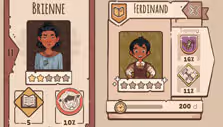
Each suitor comes with a profile where you can then decide their suitability. There are two main factors to consider here: 1. Affinity, which will determine if their relationship will improve or deteriorate as per their compatibility; and 2. Traits, stats, as well as job suitability and aspirations of the suitor that will determine if they will fit into any open role available in the village.
For the first factor, Affinity, it’s determined by multiple sub-factors, like how compatible their likes and dislikes (a.k.a. their hobbies) are, and their traits as well as their natural attractiveness. The second part can be a bit tricky since most people tend to be qualified for multiple jobs due to their unique set of traits. Naturally, you’ll want to have the best positive traits while minimizing the negative ones, or at least choose suitors with negative traits that shouldn’t affect their job scope. Some people even have genetic traits – can be positive or negative – that technically should be inheritable in their offspring, but we’ll tackle that later in a bit.
Different people aspire to perform different jobs too, so that’s something you can take into account, aside from whether they have the stats, namely Strength, Intelligence, Dexterity, and Charisma, to do so. Of course, you’ll want to choose someone who is the best fit for your villager in question as well as for the village. You can spend hearts to browse through more suitors but know that the more matchmaking you do, the cost will grow as well.
Once you have your perfect – as much as possible anyway – candidate, it’s time to do some homework… groan! You see, the dating process in this game mainly consists of three main pop quiz-style questions that delve into the likes and dislikes of both people involved in the relationship. You’ll need to memorize their matching likes and dislikes to agree on the same thing if the option pops up, and avoid conflicting interests like the plague.

However, if you need some help during the “quiz”, you can spend some hearts to unlock six clues. They mostly work as intended, but there seems to be a bug here where sometimes, the suitor may balk at a response that you’re pretty sure they would have agreed with. At this point, it can feel like the responses you get seem a bit random sometimes. Anyway, out of the three questions, you just need to get one of them right for a match to be made, so it’s actually not too difficult to set the couple up for marriage.
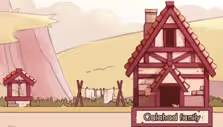
After the dating process, you can then decide if they should be married or not. Once married, the married partner will then move to your village, and you’ll then have one more villager to put to work. Of course, before they could move in together, you’ll need to first build a home for them. You can build up to 40 houses in total in this game, and that’s a whole lot of people you can house in your village.
As you might expect, villagers have needs that you’ll need to fulfill or they will end up being discontent. Their needs will evolve the longer they stay in your village, resulting in wanting more and better goods that your village can hopefully produce by then. The needs also vary depending on their social class. Naturally, the “advanced needs” of a noble will be different from a peasant.
Starting a family is something that some couples would love, and this is further boosted, whether by a little or a lot, by how well the dating process went. Note that the game doesn’t discriminate between same-sex or hetero couples, allowing them to both produce, or in the former’s case, adopt babies.
However, how many children a couple can get depends on several factors, including whether there’s space in the house – you can spend resources to expand the house up to five times, so you can get five children per household max, the age of the couple, and whether or not the couple “Desired” to have more kids.
These babies will grow up and develop their own traits and stats; likes and dislikes. Although you may think that genetic inheritance may play a role here, it seems to be the opposite and relies more on chance. In fact, the traits and stats a kid will have when he/she grows up depend more on their apprenticeship, which they can take on at around age 6.
By attaching themselves to a mentor, they will be able to learn relevant workplace skills. Of course, having an aspiration for a job will make the learning process faster, and so does having a mentor who has a high Intelligence rating and can teach better. Once an apprenticeship is completed by age 18, the young adult will move out of their parents’ house – and yes, you’ll need to provide a new dwelling for them – and will be eligible to seek a partner to share their lives with.
As with life, there’s also death. Villagers will die of old age or other issues, like illnesses or even sudden death, in this game, opening up jobs for new people to take on. The widow or widower of the deceased can be immediately paired up with a new partner, but they typically will still suffer from a morale reduction due to being recently widowed. This is similar to the kind of morale reduction you’d get from breakups and divorces too.
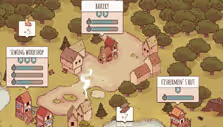
The second part of the gameplay in Lakeburg Legacies involves mostly village management. You should know that the game isn’t a village builder per se, since the buildings you can unlock in this game have fixed locations on the map. The only thing you can change about it is how you staff it and what upgrades you decide to invest in. This is where the management part comes in!
So, in this game, there are many different kinds of production buildings that you can unlock and build, provided that you have the resources to do so, that will generate a specific resource over time as long as the buildings are staffed by villagers, preferably competent ones. For instance, the lumberjack produces wood, while the mine produces metal. As you progress, you’ll unlock new buildings that can even produce unique consumables like building tickets that can cut down on upgrade/build costs or buildings that can counteract some of the vices-related buildings, which I’ll be covering in a bit.
You can only have one of each production building, so if you need more of a certain resource, you can either upgrade the building to increase production, costing you precious gold, or you could spend resources to unlock a new worker slot (up to 5 per building), and staff it with someone who has an affinity for the work (and hence, has higher productivity). Upgrades also include ways to lessen the negative effects of work on people, such as the morale and lifespan of your workers, and sometimes, you can even unlock a new resource production, like unlocking the production of wheat at the farm.
Storage is also another important aspect of the game that may require some upgrades. You see, you can only store so much of each resource at a time, and if you need to hoard more of them, say to construct a new production building, you’ll need to spend gold to expand the storage capacity for that resource.
As such, gold plays a really crucial part in this game. Unfortunately, at the start at least, it’s not as easy to earn a lot of gold quickly. The only main way you can do so is by selling off any excess resources you may have via the traveling merchant, who will stop by every now and then. You can technically try to get the merchant to return to your village sooner by bribing his mount with love (hearts) and a bit of vegetable, but know that this cost will increase every time it’s used. Plus, the cooldown time between merchant visits will also get longer and longer. Eventually, it’ll be too costly to call the merchant to your village, and you’ll have to find other ways to earn gold.
This is when, hopefully, your village has already advanced to a point where you have the means to build a Castle. By appointing a suitable king or queen to the throne, you can start taxing your populace and get a steady stream of gold every month. Of course, you can adjust the amount taxed, but of course, that’ll have ramifications on the morale of your villagers. At one point, some of your production buildings may also have gold upkeeps, so you might want to keep that in mind as well whenever you want to spend your gold on some upgrade, lest you stop the production of a critical building by accident.
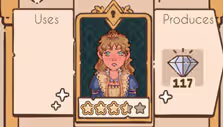


People being people, it’s inevitable that, at one point, vices will start popping up in the village. This is where the vice-related buildings, a.k.a. the illicit trade, like the pleasure house, the thieves guild, and the rodent’s nest, come in. These buildings will passively and negatively affect a certain important aspect of your village, be it Faith in the case of the pleasure house, and Health in the case of the rodent’s nest (because, you know, rats bring the plague). The only way to greatly reduce the negative effects, at least at first, is by staffing these buildings with competent villagers who are well-suited for the job.
However, as your village population grows, you’ll find yourself having to send more and more villagers to staff these buildings, and still, the negative effects of the vices can be felt throughout the village since you can’t completely negate the effects this way. At this point, your village should be big enough that you’ve unlocked production buildings that can counteract these negative effects.
By building the hospital and staffing it with competent healers, for instance, you can have healers regularly restore health to the village’s overall health. The church, on the other hand, can be staffed with priests and priestesses who can restore Faith, counteracting the negative effects of the pleasure house.
There are also some overlaps between these two aspects (the village management and the relationships between people) of the gameplay. From time to time, you’ll get events that will update you on the relationship developments of various people in your village. It’s easy enough to keep track of at first, but as your village expands, this can be quite hard to do.
Occasionally, an event will also pop up, prompting you to make a decision as to what you’ll want to do to address the issue, such as a cheating scandal or an argument between two equally hot-headed villagers. Sometimes, you may be asked to address class-related issues, forcing you to choose, for example, to either side with the artisans or the peasants. These relationships, along with their traits, will affect productivity at the workplace. After all, it’s not too far of a stretch to say that putting a cheating husband and his ex-wife together in the same production building won’t cause them to butt heads.
Personally, the game has me hooked right from the start, and hours went by without me even noticing it. It has a lot of fresh content and stuff for you to unlock as you progress. The variety of events you encounter is also truly impressive. Despite putting hours into the game, I have yet to see a repeated event pop up. However, at one point, the dating part of the game can start to feel a bit too random (probably because of the bug) and repetitive.
The game’s UI can definitely be further improved as well. In this game, aside from the hotkey to quickly pause the time, there are no other key bindings to cut down on all the clicking. It’d also be nice to have a pop-up appear in the middle of the screen whenever something urgent came up, such as the emergence of a rodent nest, if there was a new recruitment, or if the merchant arrived.
Graphics/ Sound
Lakeburg Legacies features hand-drawn visuals that look simply amazing. I love that there are just so many different kinds of character portraits in this game and that they each have many versions to showcase their age progression from a baby to becoming an elderly. The colors used here are also mostly vibrant, perfectly matching the game’s more upbeat theme.
In terms of sound, the music here fits well with the game’s medieval theme, offering a selection of pleasant tunes filled with the sounds of the lute and flute that won’t be too out of place at a tavern.
Conclusion
All in all, as an avid fan of management games, Lakeburg Legacies started off rather strong, offering new challenges and unlocks that kept me engaged to the point where hours went by, and I hadn’t even noticed. However, the novelty of it all begins to wear off, especially the dating aspect, once you’ve matched your 50th couple and when your population has ballooned to over 100 people. Despite being a fully-launched game, you’ll still encounter some bugs that may turn some aspects of the game from predictable randomness, such as in the case of inheritance, to complete randomness.
So, Lakeburg Legacies offer a unique combination of genres that is both fun and exciting, but you may start to notice cracks as you progress, especially once you approach the late game. It’s worth the price tag for me though, especially considering the hours of playtime you can get out of just one standard run of the game, let alone multiple runs as you try out new game styles and challenges.
Lakeburg Legacies Blog
View allNew Game Added: Lakeburg Legacies
by Aethyna
Jul 26, 2023
Read More
Spicy drama awaits in social-based management sim Lakeburg Legacies, out now on Steam!
by Aethyna
Jul 21, 2023
 Read More
View more

Featured Games
 RAID: Shadow Legends
Recruit the best to join your team and take on Siroth, the Lord of Darkness himself!
 Dark Genesis
Play Dark Genesis and save the world from destruction with your allies.
 Pearls of Atlantis: The Cove
Shoot pearls and match them all together in Pearls of Atlantis: The Cove!
 Infinite Crisis
Become a Superhero and Save the Multiverse in A Stunning MOBA by DC Comics.
 Sparta: War of Empires
Fight off The Persians & Other Spartans in a Stunning Strategy Game Set in Sparta.
League of Angels
Enjoy a Great MMORPG & Fight with Angels at your Side against A Great Evil.
