

Labyrinth of Zangetsu
 by Mikhail
Jul 29, 2023 |
1
Votes |
35
Played |
0
Reviews
 9
rate
Genres:
RPG , AdventureGraphics:
3DLabels:
Demons , Dark Fantasy , Post ApocalypticPlatforms:

Publishers:
PQube Labyrinth of Zangetsu is a turn-based, party-based RPG where you recruit and control a team of conscripts who venture forth to stop a calamity from further spreading across the land. Featuring robust dungeon-crawling mechanics, customization elements, harrowing tales, and a sublime hand-drawn art style. Play Now Similar Games

People Also Played


Summary
Labyrinth of Zangetsu is my first ever dungeon crawler, and quite frankly, it made me highly remorseful. Why? Well, it gave me a good taste of the genre I should have gotten into long ago, which I avoided because I wasn’t a fan of how they looked and played - not seeing your characters in the thick of battle was a deal-breaker. Think Etrian Odyssey and Operation Abyss: New Tokyo Legacy.
With that said, Labyrinth of Zangetsu won’t be my last game in the genre - it acted as a fantastic gateway to the world of turn-based dungeon crawlers. Unlike some of its peers, it is relatively accessible - the character upgrade system, combat, and other gameplay elements are easy to learn and grasp. You don’t need to learn lots of jargon or familiarize yourself with skill trees and other nooks and crannies. Couple this with an intriguing setting and fun exploration elements, and you’ll have a fantastic experience.
So, should you give Labyrinth of Zangetsu a shot? Before you start exploring the labyrinths, let’s check out what it has to offer first:
Plotline
Imagine this: the world is on its knees because of a blight that turns almost everything black or gray while driving man and beast to madness. Known as the Ink of Ruin, it made the remnants of humanity take refuge in a walled city, which is undoubtedly the last bastion, protecting its inhabitants from the plague.


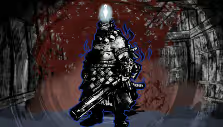
Thankfully, people aren’t just hiding and clinging on for dear life. Its government enlisted the bravest and most skilled fighters to explore the blight-ridden lands, risking their lives to uncover the secrets of the ink and, eventually, conquer it. These warriors are called the Blightbane, and though you won’t play as one of them, you’ll control a party of these ardent souls to explore the labyrinths, fight goblins and demons, and obtain treasure. Most enemies and characters you’ll encounter are based on Japanese folklore and history, particularly in the Edo period. Moreover, there are characters and beings you'll encounter as you explore which will treat you with some tidbits of lore.
Gameplay
Labyrinth of Zangetsu is a turn-based dungeon crawler where you explore various “labyrinths” and take on ink-infested creatures to reclaim the land back from the blight. It’s a party-based game, which means you’ll control several characters (up to six) in every adventure and use them in battle. The progression mechanics and upgrade system aren’t as in-depth as other games, but this works in the game’s favor since it lets you focus on exploration and combat.
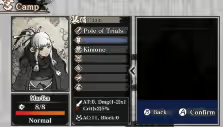
You can enlist characters in the game and add them to your party. There are six presets characters aptly named with numbers one to six in Japanese, but you can change their names and portraits. Moreover, you can also create new characters from scratch if you’re feeling up to it. There are several races and corresponding archetypes to take note of. For example, the oni (or Japanese demon) best works as a frontline melee unit, while certain character types best-fit backline roles like mage or priest. Humans, meanwhile, are all-around characters that can play almost any position.
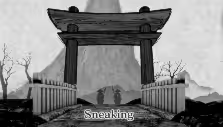
Exploring dungeons and battling enemies inside them are Labyrinth of Zangetsu’s main draws. You can explore These locations like labyrinthine mazes (hence their in-game name) in first person. Players can move forward in one-step intervals and encounter locked doors, hidden passageways, chests, and enemies that take the form of black smoke. Apart from moving around, you can enter stealth mode and investigate interesting areas with secrets that can help you move forward when you’re stuck.
Combat is exciting in Labyrinth of Zangetsu, although it can get frustrating if your characters miss many of their attacks. You can divide your characters into the backline and the frontline. The backline characters can deal damage from afar using ranged weapons and magic or cast healing spells, while the frontline characters are your tanks and melee fighters. Apart from attacking and using skills and magic, you can also parry or defend, which is necessary for characters with low HP.


To strengthen your characters in between battles, you can use the city hub to trade gear and sell items in preparation for your labyrinth excursions. The city is also home to the temple where you can heal or purify your characters or resurrect ones who have died in battle.
Graphics/Sound
In terms of presentation, there’s nothing quite like Labyrinth of Zangetsu. Everything is hand-drawn; playing feels like going through countless Japanese-style paintings, especially when trotting around the dungeons. The same can be said about the massive number of character portraits and overall art style, which are sublime.
Though the audio elements feel a little lackluster, and there are barely any special effects, the game is still relatively impressive.
Conclusion
Overall, Labyrinth of Zangetsu is an excellent dungeon-crawling turn-based RPG that deserves a spot in your video game library. If you’ve never played a game like this genre, it makes for an ideal gateway thanks to its easy-to-understand mechanics and intuitive gameplay.
Labyrinth of Zangetsu Blog
New Game Added: Labyrinth of Zangetsu
by Mikhail
Jul 29, 2023
Read More

Featured Games
 RAID: Shadow Legends
Recruit the best to join your team and take on Siroth, the Lord of Darkness himself!
 Dark Genesis
Play Dark Genesis and save the world from destruction with your allies.
 Pearls of Atlantis: The Cove
Shoot pearls and match them all together in Pearls of Atlantis: The Cove!
 Infinite Crisis
Become a Superhero and Save the Multiverse in A Stunning MOBA by DC Comics.
 Sparta: War of Empires
Fight off The Persians & Other Spartans in a Stunning Strategy Game Set in Sparta.
 League of Angels
Enjoy a Great MMORPG & Fight with Angels at your Side against A Great Evil.