

Farm Keeper
 by Aethyna
Jul 15, 2023 |
1
Votes |
78
Played |
0
Reviews
 10
rate
Genres:
SimulationGraphics:
2DLabels:
Pixel Art , Cozy , Farm , ManagementPlatforms:

Publishers:
Napas Torteeka You've just rented an island to start your farming career, but your landlord is a bit of an A-hole who decided to raise the rent every four days. Place your tiles strategically, grow the most profitable crops, and find ways to earn more profits so you can make the next rent payment! Will you finally be able to own the island? Play Now Similar Games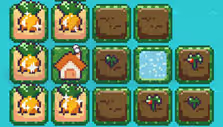

People Also Played


Summary
Farm Keeper is a cozy farming game with a fun dash of strategy in it. In this game, you’ve just rented an island to start your farming career, but your landlord, who is a bit of a passive-aggressive jerk really, decided to keep increasing your rent by quite a substantial amount every four days. Place your tiles strategically, grow the most profitable crops, and find ways to earn more profits so you can make the next rent payment. At the end of the day, you might just accumulate enough resources to buy the island outright and win the game! There are tons of new tiles to unlock as you progress, each adding something new to the gameplay.
Gameplay
The turn-based gameplay Farm Keeper is quite similar to some of the hex-based city builders I’ve reviewed before in the sense that tiles often have effects on other tiles around them. For instance, the water tile will automatically water the crops around them, while the windmill tile will speed up crop growth for the crop tiles around it. Sometimes, it’s a good idea to work with these synergies to grow your crops more efficiently and earn even more profits.
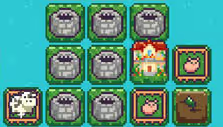
Every turn, you’ll get 12 stamina points to use. There’s no way to increase the maximum limit, as far as I could tell, but you could place wells that will grant you a full stamina refill every three days. As your farm expands, it’s important to have enough wells so that you can have enough stamina to perform your daily chores. Once all the stamina has been used up, you can proceed to the next day. Note that crops in this game don’t wither away, but there are some crops that will die off if they aren’t watered.

Farming in this game consists of a four-step process – plowing, planting, watering, and harvesting. However, there are ways you could circumvent some of the steps, saving you some precious stamina in the process. As mentioned, you could place a water tile to water nearby crops automatically. You could also place a farmer tile who will perform one step of the process for one coin, but you can only employ the farmer twice a turn, and the farmer will only attend to crop tiles that are around it.
Selling off harvested raw crops doesn’t really earn you a whole lot of money, even if you’re growing the most lucrative crops you have. This is why you’ll want to convert those crops into goods via some of the shop tiles you can place, like the florist tile or the medicine maker tile, which will turn all harvestable flowers or herbs/mushrooms around them into more valuable bouquets and medicine respectively.
Plus, there’s also another benefit to doing this – having the shop tiles convert and sell off the goods they produce is cost-free, meaning no stamina is needed. This is not the case if you decide to harvest the crops manually. You could also grow crops to feed various farm animals, some of which, like the cow and chicken, will produce milk and eggs every turn as long as there are mature crops they can consume nearby. You could further process those produce into goods, such as converting milk into cheese, but personally, the stamina cost of doing so doesn’t seem as lucrative as, say, a florist or medicine maker.
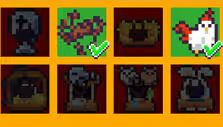
There are also additional resources that you may want to get whenever possible in this game, namely stone and wood, which you can get from rock/ore tiles and any tree tile, respectively. There’s also a side objective that you can try to complete to get an additional resource… randomly given, of course! With these resources, you’ll be able to purchase new tiles to add to your island without ending the current turn. This can be especially helpful in certain situations, like if you need more stamina urgently and have a spare stone available, you could just place a new well tile and grab that full stamina refill.
Ending the turn will bring you one day closer to your rent payment day as well as giving you a free tile to choose from out of the three available. You could also opt to not choose and instead spend some coins to buy an empty tile instead.


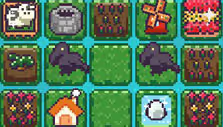
The end goal of this game is to finally escape from the destructive cycle of paying increasing rent every four days by owning the island yourself. To do so, you’ll need to build the Mansion tile, which will cost you a pile of coins and some resources. The Mansion tile will be unlocked once you reach a certain milestone in the game, depending on which difficulty (a.k.a. game mode) you’re playing. Note that you can unlock greater difficulties by completing a run in the previous difficulty.
Graphics/ Sound
Farm Keeper features pixel art that looks both adorable and fitting for a game of its theme. I also like that the game actually shows your animals growing instead of just sizing up the baby version of the animal. In terms of sound, it has a relaxing soundtrack that’s pleasant to listen to as you play. It’s looped, but you’d be so focused on your farm that you’d hardly notice the looping.
Conclusion
Farm Keeper is a truly fun and addictive farming game that seems to blend the strategic tile-placing gameplay of cozy city builders with some idle clicking that may bring to mind games like Forager. The game is also surprisingly challenging enough to keep you engaged, especially the further you progress in the game, where the cost of rent is increasing at quite an exponential rate, forcing you to find creative, albeit inefficient, ways to eke out more profits every turn.
Farm Keeper Blog
New Game Added: Farm Keeper
by Aethyna
Jul 15, 2023
Read More

Featured Games
 RAID: Shadow Legends
Recruit the best to join your team and take on Siroth, the Lord of Darkness himself!
 Dark Genesis
Play Dark Genesis and save the world from destruction with your allies.
 Pearls of Atlantis: The Cove
Shoot pearls and match them all together in Pearls of Atlantis: The Cove!
 Infinite Crisis
Become a Superhero and Save the Multiverse in A Stunning MOBA by DC Comics.
 Sparta: War of Empires
Fight off The Persians & Other Spartans in a Stunning Strategy Game Set in Sparta.
League of Angels
Enjoy a Great MMORPG & Fight with Angels at your Side against A Great Evil.