




Farlanders
 by Aethyna
Mar 13, 2023 |
1
Votes |
25
Played |
0
Reviews
 10
rate
Genres:
Simulation , Strategy , PuzzleGraphics:
2DLabels:
Pixel Art , Turn Based , Sci-FiPlatforms:

Publishers:
Crytivo Farlanders is a strategic and somewhat puzzle-like, turn-based city builder where you get to set up a thriving Martian colony, both on the surface and underground. Fulfill the objectives of your superiors, make sure your people’s needs are being met to keep them happy, and have enough resources to spare to expand your colony! Play Now Similar Games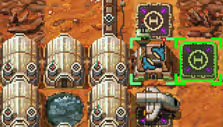

People Also Played


Summary
Farlanders is a strategic and somewhat puzzle-like, turn-based city builder where you get to set up a thriving Martian colony, both on the surface and underground. Fulfill the objectives of your superiors, make sure your people’s needs are being met to keep them happy, and have enough resources to spare to expand your colony! The game also comes with a freeplay mode, and will eventually offer daily challenges and a sandbox mode too.
Plotline
In Farlanders, you play as Marco, a young, promising terraforming manager working for the Foresyte Corporation with the goal to terraform Mars into a more habitable planet for mankind. He works together with his colleagues and friends, Esther and Victoria, as well as his boss who’s the very definition of a “cool boss”, Leland.
However, as he advances up the rank ladder, he is eventually made aware of a rare and powerful mineral that exists only in the bowels of subterranean Mars. The thing is the mineral is still experimental and Marco might have jumped the gun on this one. This sets off a chain of events that Marco may need your help to recover from.
The storytelling here are all done in between levels, usually via visual novel-like dialogues, though there are some text-based ones. There are some dialogues in each campaign level as well, but those are typically used to lay the grounds for the objectives.
Gameplay
Farlanders is quite unique in terms of its gameplay. On one hand, if you chose to play the game the way the developers intended, then the game may feel more like a strategic puzzle due to the fact that you’ll be given a fairly restrictive turn-limit to complete all the objectives required of you in the campaign.
However, if you, like me, opted for the more relaxing route, in a way, Farlanders turns into something like a 4x strategy-style game although the goal remains the same – to complete all the main objectives. Note that not all main objectives are out in the open right from the start and new ones may pop up as you complete the previous main objectives. There are also several side objectives that you can choose to take on, or not – it’s entirely up to you!
Ultimately, the gameplay in Farlanders is all about balancing your resources’ output and input, then scaling up to accommodate more people and hence, expanding your operations. To do so, there are plenty of factors in play that you’ll need to be aware of. One of the main ones is the land type.
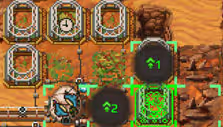
The land type matters a lot in this game. For instance, there’s no way to produce any electricity if you build your solar panels in the shade of a mountain, right? The soil type also determines whether it’s suitable to sustain larger buildings (more advanced housing, for example) or is fertile enough for the food crops in your greenhouses to thrive. The buildings and the terrain may have synergistic effects too. For instance, building wind turbines along mountain walls will grant a nice boost to the electricity they are able to produce. The same goes to canyons or mosses for luxury homes, these homes will get a nice happiness boost, which can be crucial as you grow your population beyond the 300-mark.
Due to this, you’re regularly given terraforming tools that you can use to change the landscape of Mars to your needs, whether it is to unfreeze a water hole to “water” your new greenhouse sector or to demolish a meddlesome mountain range that is blocking the sunlight from hitting your solar panels behind it. You can also create canyons within your housing sectors to house swimming pools or simply to capitalize on that precious happiness boost for luxury homes.


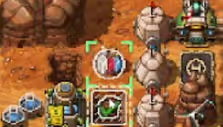
However, the tools here can be tricky to use sometimes, since some of them may with requirements, such as requiring to be near several canyons of a specific position, or may cause some other unwanted “side effects” like adding a new mountain on the grid of land you’re reserving for a greenhouse. You just have to make the best of them and use the tools to their best effect! Eventually, you’ll also be able to spend your hard-earned cash to buy more terraforming tools and store them in your (virtual) chests.
Besides land and soil type, the facilities and infrastructure you have matters too. This is because some buildings may require reinforced pipes and wires, while others may require tunnels to funnel workers to the buildings. The terrain may hinder your building efforts in some of these cases since tunnels can’t be built into mountains, across canyons, or on wastelands, while wires and pipes can go on most tile types except mountains and canyons.
You can view your entire electrical or piping grid easily using the layer filters available on the side of the screen. There’s even a layer for population happiness and exploration coverage, which would come in handy later down the road.
Now, as you might expect, most of the building you do here requires a lot of resources. Although you can get most of them by mining their respective nodes or deposits on the map, there are probably times when you just need an extra boost. This is where trading comes in! You can spend cash to purchase resources you may need. Trading in this game can unfortunately be a bit rigid in the sense that you can’t just buy the exact amount you need. Instead, you get to choose from a list of offers and decide which to accept. The offers will also include the number of landing pads you need, so if you don’t have enough, make sure to build some more.
Having a trading port, in this case, would be insanely helpful too. Not only will it let you build additional landing pads, but you’ll also get to install the Trade Shuttle module which allows you to sell any excess resources you may have to earn some extra cash. This is especially great if you are in need of cash and don’t fancy going through the hassle of manually disabling all the structures that are going to be overproducing a certain type of resource in the next turn.
Trading aside, money can usually be earned passively depending on how many colonists you have and how happy they are, plus any cash-earning incentives like growing moss and grasses, or setting up a restaurant. Happier colonists will net you more money per colonist. However, every hired colonist will cost you money instead in the form of wages.
Of course, if you really need more money but have no way to make it quickly, you could always take out a loan and hope you can repay both the loan and the interest on time.
Your colonists’ happiness doesn’t really matter much at first but eventually, it’ll become a major factor in the growth of your colony. This is because no new colonists will want to join your colony if its happiness rating dipped into the negatives. There are many entertainment buildings, like pools and community centers, and selected décor like statues that you can set up to increase your colonists’ happiness but there’s a limit to their effectiveness, especially if you keep building the same one type of happiness-generating buildings. The game forces you to diversify your entertainment buildings and décor just so you can overlap the happiness-boosting effects, granting even more happiness to your population.


The coverage areas matter too and thankfully, in this game, you can move the coverage areas slightly away from their respective sources to ensure maximum coverage. Population is very important in Farlanders mainly because it’s used as a milestone indicator for your colony to level up. Every level up will grant your colony precious technology points which you can then use to unlock new tech on the technology tree. You may even get to appoint a specialist, out of the three given, who’ll be able to grant you a passive perk through the level.
At one point, you’ll be able to expand underground as well as to scan for anomalies which would give you rare resources that you typically wouldn’t be able to find on the surface. These rare resources are vital for advanced buildings and modules, but are unfortunately quite costly, so it’s best to hoard as much of them as you can.
Underground expansions in this game will eventually unlock a whole new range of technologies that will allow you to, for instance, farm underground or grow fungi. This can come in handy during the bitter Martian winters in later levels, though personally, I find that maintaining a surface base still works better for me.
As much fun as the game is, I think Farlanders still has some room to grow, mostly tweaks to existing gameplay elements and features. For instance, it could maybe show how many turns a winter is going to last. It’ll be great as well to be able to enable or disable the Trade Shuttle module depending on need once it is installed since it seems like landing pads with this module installed can no longer receive traded items.
Graphics/ Sound
Farlanders features pixel art that looks somewhere along the lines of Factorio, which I personally adore. The art for each of the characters you get to interact with throughout the campaign is very well-done too, featuring the kind of style that you may be already be familiar with if you’re a fan of visual novels as well.
In terms of sound, the game comes with a selection of soundtracks that are designed to keep you relaxed and calm while you’re trying to figure out the best way to use that terraform you’ve just gotten or how to design your growing underground colony.
Conclusion
All in all, Farlanders is truly a game that should be in a class of its own. The pixel art presentation; the addictive “one more turn” gameplay loop; and its unique mechanics that combined both elements of puzzle and strategy worked brilliantly together to offer players an entertaining and rewarding experience, giving them the chance to build and develop their own Martian colonies.
If you love playing turn-based games that will have you plan ahead and manage a Martian colony, Farlanders is one unique gem of a game (developed by a single dev, no less!) that you simply don’t want to miss out on!
Farlanders Blog
New Game Added: Farlanders
by Aethyna
Mar 13, 2023
Read More

Featured Games
 RAID: Shadow Legends
Recruit the best to join your team and take on Siroth, the Lord of Darkness himself!
 Dark Genesis
Play Dark Genesis and save the world from destruction with your allies.
 Pearls of Atlantis: The Cove
Shoot pearls and match them all together in Pearls of Atlantis: The Cove!
 Infinite Crisis
Become a Superhero and Save the Multiverse in A Stunning MOBA by DC Comics.
 Sparta: War of Empires
Fight off The Persians & Other Spartans in a Stunning Strategy Game Set in Sparta.
League of Angels
Enjoy a Great MMORPG & Fight with Angels at your Side against A Great Evil.
