




Astro Boy: Edge of Time
 by Aethyna
Jun 29, 2017 |
1
Votes |
0
Played |
0
Reviews
 9
rate
Genres:
T/CCG , MMOGraphics:
2DLabels:
Deck Building , Anime , Sci-Fi , Player vs Player (PvP) , Collectible Cards , Adventure , Futuristic Setting , Aliens , RobotsPlatforms:

Publishers:
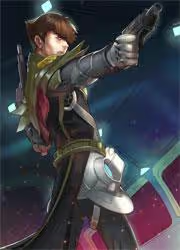
Active Gaming Media With an intriguing storyline coupled with brilliantly-designed game mechanics, Astro Boy: Edge of Time is one MMOCCG you wouldn't want to miss! Build a unique deck for each faction and head out to search for the missing Astro Boy and eventually battle the darkness that has almost engulf everything in existence. Play Now Similar Games


People Also Played


Summary
With an intriguing storyline coupled with brilliantly-designed game mechanics, Astro Boy: Edge of Time is one MMOCCG you wouldn't want to miss! Build a unique deck for each faction and head out to battle the darkness that has almost engulf everything in existence. Fight against other players in a single match or in exciting tournaments, or train by battling an AI instead. There are tons of beautifully drawn cards to collect and strategies to discover as you embark on your journey to find the missing Astro Boy and help him save the universe.
Plotline
It’s rather rare to see an in-depth and well-fleshed out storyline in an MMOCCG, but this is exactly what you can expect – more so if you’re a huge fan of Astro Boy – in this amazing game. The game has plenty of plots all running concurrently with snippets that flash in from time to time showing you that something else is going on in another part of the city. Each plot is well delivered with a mixture of anime comic drawings and dialogues.
The only downside is that although there are also cutscenes where there are verbal dialogues, all of these are still voiced in Japanese and somehow the cutscenes are replaced with black screens.
That said, this game is basically set in a futuristic and somewhat apocalyptic world where a darkness has consumed everything in its path and the only corner of the universe that is safe from its reach for now is the city at the edge of time. However, in the city, in the Sprawl to be specific, things aren’t exactly peaceful either.
Various robots and cyborgs have risen up to fight for robots’ rights while there are extremist sects that oppose this movement. There is also the looming threat that Goa, the powerful alien king from beyond, poses ever since he barely escaped with his life after Astro Boy along with a group of heroes and summoners took out his army. Of course, let’s not forget about the shadowy Crown Council. They are secretly concocting some devilish plan to take over the Sprawl. All of these are happening as Astro Boy has mysteriously disappeared since his battle with Goa. Intriguing, isn’t it?
Gameplay
After creating your character, you’ll eventually be guided through the game’s tutorial at the Ministry of Science. The interesting thing about this though is how seamlessly the game manages to slip in both the character creation and tutorial into its storyline.
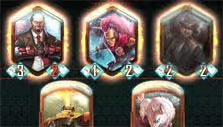
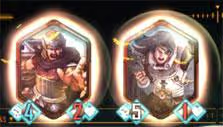
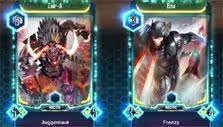
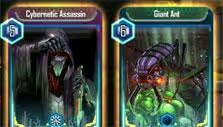
That said, if you’re expecting the same-old MMOCCG format, you’ll be in for quite a surprise. In Astro Boy: Edge of Time, the battlefield is not only separated into 2 zones – one for each player; each zone contains 2 rows. The top row is the enforcer row where you can place units that you want to attack your opponent with, while the bottom row is the guardian row in which defending units that will help stop any direct attacks on your character are placed. The game interestingly separates both defending and attacking units, forcing you to put in some extra consideration whenever you want to play card since defending units cannot attack and attacking units cannot defend.
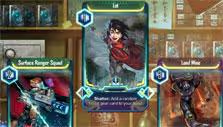
Not to mention, some unit cards may seem to be more suitable for, say... the guardian role due to its high health, but ultimately, it’s still up to you to decide where to place your unit cards. Which zone you decide to deploy your unit cards makes all the difference! Unit cards, in this game, also have their own abilities of course; some of which can be immediately activated once the card is played while others will require Strategems which can be earned by keeping that unit card alive for a few rounds.
Each player will need to choose a faction alignment (by choosing a deck of that faction) prior to a combat. There are 4 factions in total, namely 9 Kings, Order of the Burning Feathers, Ministry of Science and Gearwork Revolution. Each faction will have a special faction skill that can only be activated by sacrificing a card on hand. The skill comes in the form of a “gear card” or as some may know as an ability card which you can then use as long as you have enough Quantum (a.k.a. Mana).
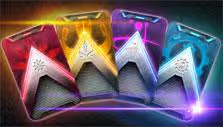
Every battle you win will get you some game currency called Prisma and also a new avatar portrait. The Prisma can then be used to buy new card packs from the game shop. Interestingly though, you are allowed to buy individual cards – hand-picked ones nonetheless! – from the shop too... albeit at a much higher cost. A standard card pack of 5 random cards costs 100 Prisma, but if you want to buy individual cards, each card can cost from 100 Prisma up to 1000 Prisma, depending on their rarity. You can also spend real money to buy a subscription (7-day or 30-day) that will give you a free card pack every day.
Need more Prisma? They can be earned through other means such as completing daily quests or selling off excess cards as well.
As opposed to its brilliant gameplay, deckbuilding is pretty much standard in this game. You can customize your current default decks for each faction or you can create a new deck from scratch. The game doesn’t seem to impose any limit on how many decks you can save, so that’s good I suppose. Each deck contains 30 cards in total.
Aside from the game’s single player campaign (story mode), Astro Boy: Edge of Time also offers PvP modes, such as Tournaments and Online Matches. To play in a Tournament, you’ll need to pay the entry fee of 150 Prisma, but the rewards you can get as long as you keep winning matches can accumulate to exceed the fee you paid. However, if you are aiming to play to get some Prisma, you can play either ranked or unranked matches via Online Matches. If you have a new deck to test out, you can also battle the AI through the game’s Training Room too.
Community
Astro Boy: Edge of Time is a fairly new game and as such, its player population might be a bit on the lower end. Due to this, it might be a bit hard to find a match either in Tournaments or in Online Matches.
Graphics/ Sound
Due to its anime-theme, this game has some pretty astounding drawings, especially the card art and characters. I particularly like that the objects you see on the side of a battlefield are animated and can be played around with.
In terms of sound, Astro Boy: Edge of Time has upbeat techno music that befits its sci-fi setting. However, as mentioned, I’m a bit butthurt that the voice acting during cutscenes is still in Japanese and that there is no option to turn on subtitles. It made me feel like I’m missing out on some critical part of the game’s storyline, and I’m sure I’m not the only one to feel this way.
Conclusion
All in all, Astro Boy: Edge of Time is an impressive piece of work that will not only appeal to fans of Astro Boy but also players who enjoy a solid card battle. This MMOCCG has some pretty unique game mechanics that increase the game’s depth, giving players more ways to formulate their own strategies. However, the cream of the crop I’d say is definitely the game’s story mode and its focus on crafting an engaging storyline. Even players who have not seen or heard of Astro Boy before will be quickly sucked into this turbulent yet fascinating world.
Astro Boy: Edge of Time Blog
New Game Added: Astro Boy: Edge of Time
by Aethyna
Jun 29, 2017
Read More

Featured Games
 RAID: Shadow Legends
Recruit the best to join your team and take on Siroth, the Lord of Darkness himself!
 Dark Genesis
Play Dark Genesis and save the world from destruction with your allies.
 Pearls of Atlantis: The Cove
Shoot pearls and match them all together in Pearls of Atlantis: The Cove!
 Infinite Crisis
Become a Superhero and Save the Multiverse in A Stunning MOBA by DC Comics.
 Sparta: War of Empires
Fight off The Persians & Other Spartans in a Stunning Strategy Game Set in Sparta.
 League of Angels
Enjoy a Great MMORPG & Fight with Angels at your Side against A Great Evil.
